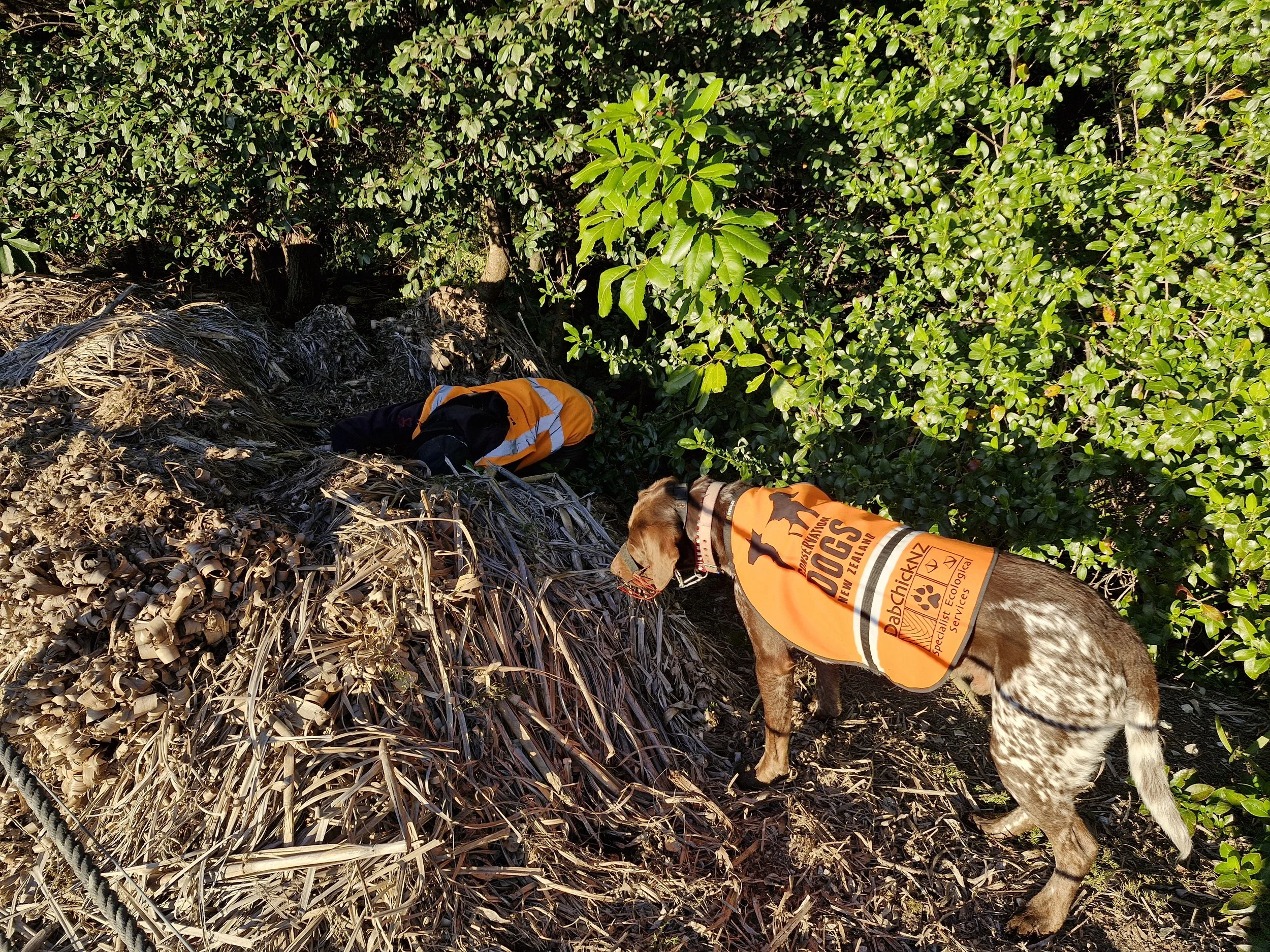
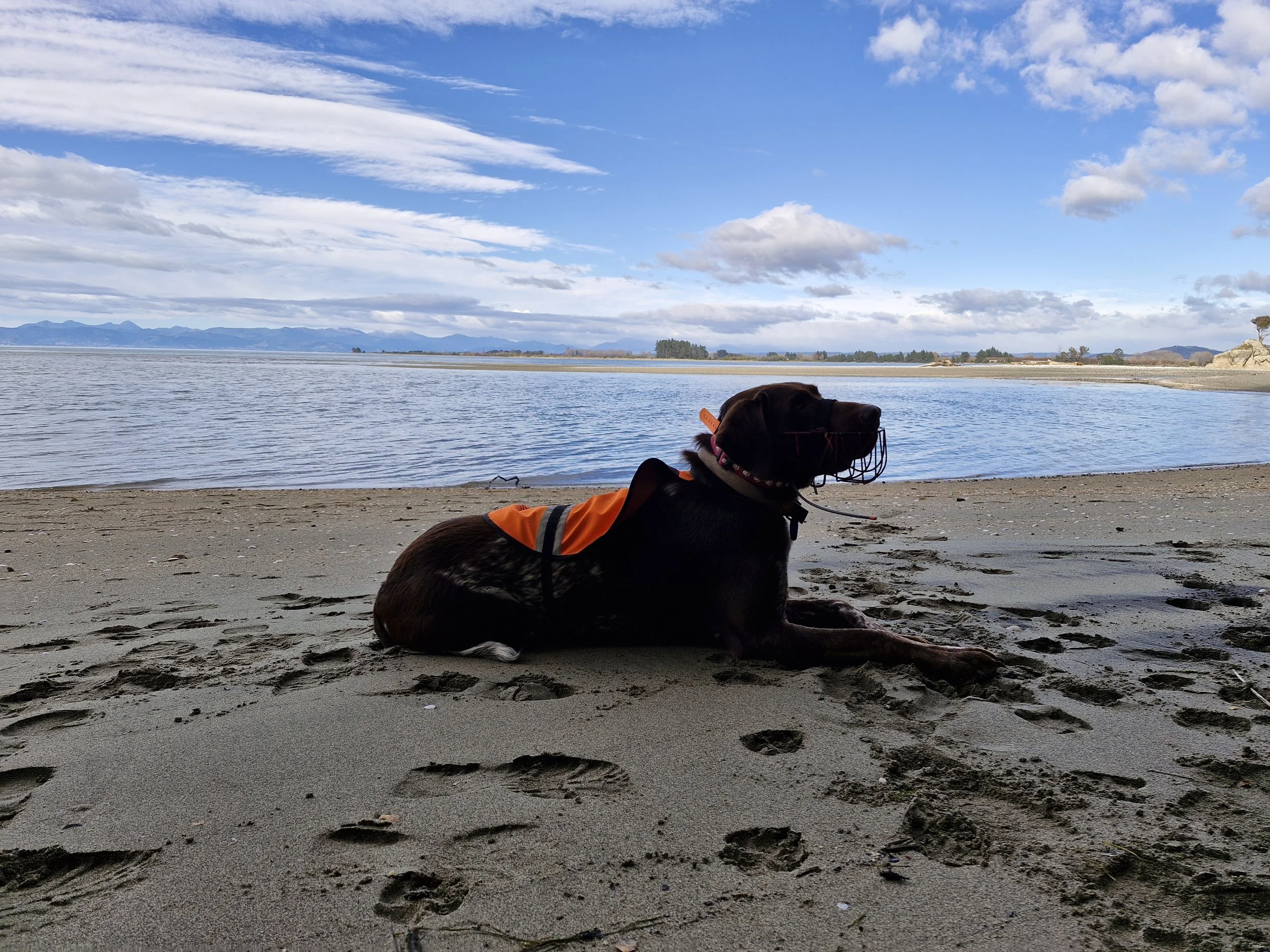
The Big Little Penguin Count: Tracking Our Korora
Little blue penguins/korora may be famous for being cute, but finding their hidden burrows along our rugged coastline is no simple task. That's where conservation dog Miro and his handler Jo Sim stepped in, undertaking an important survey to help better understand the status of our local penguin population.
Meet Jo and Miro: The Penguin Detectives
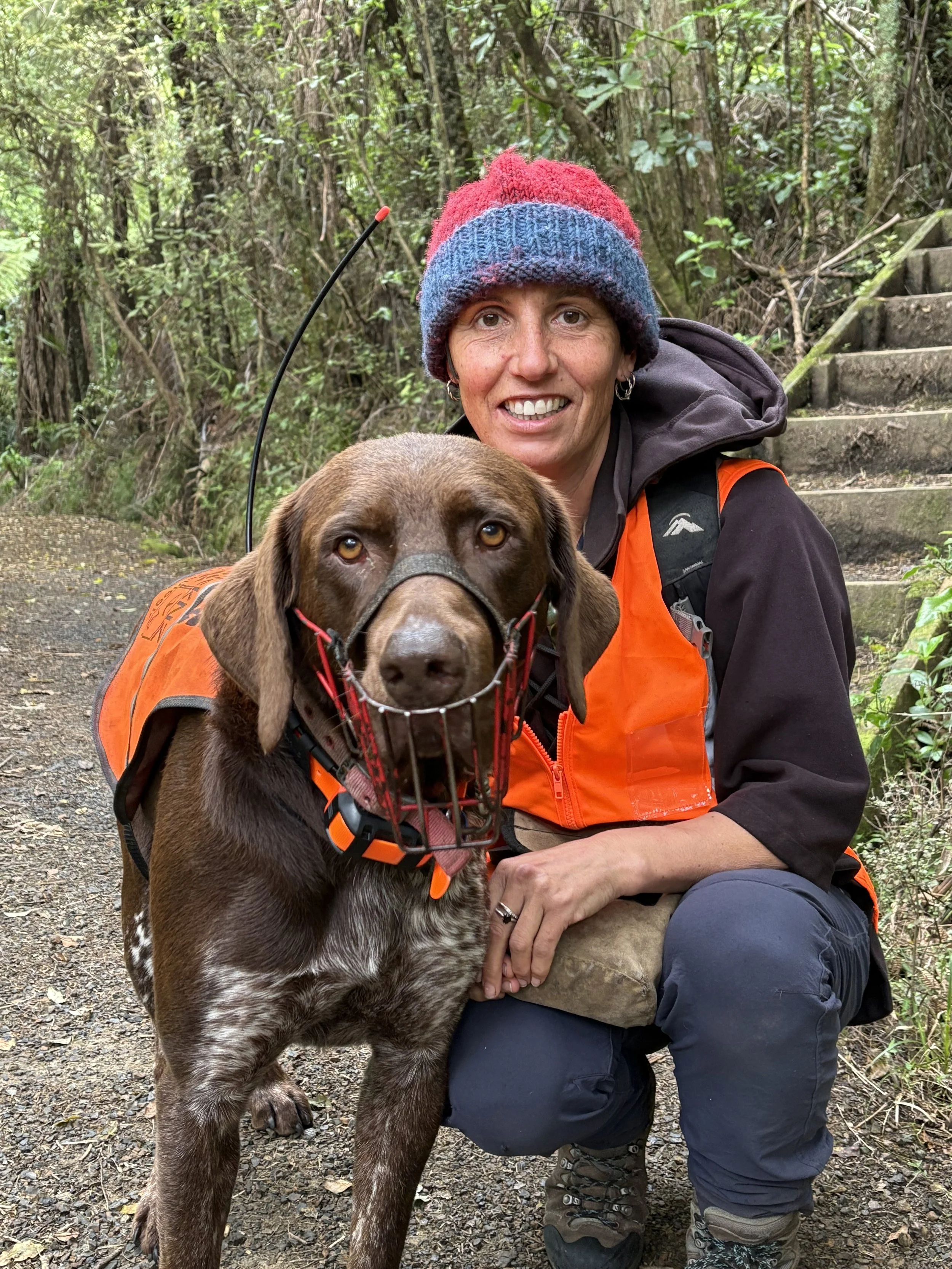
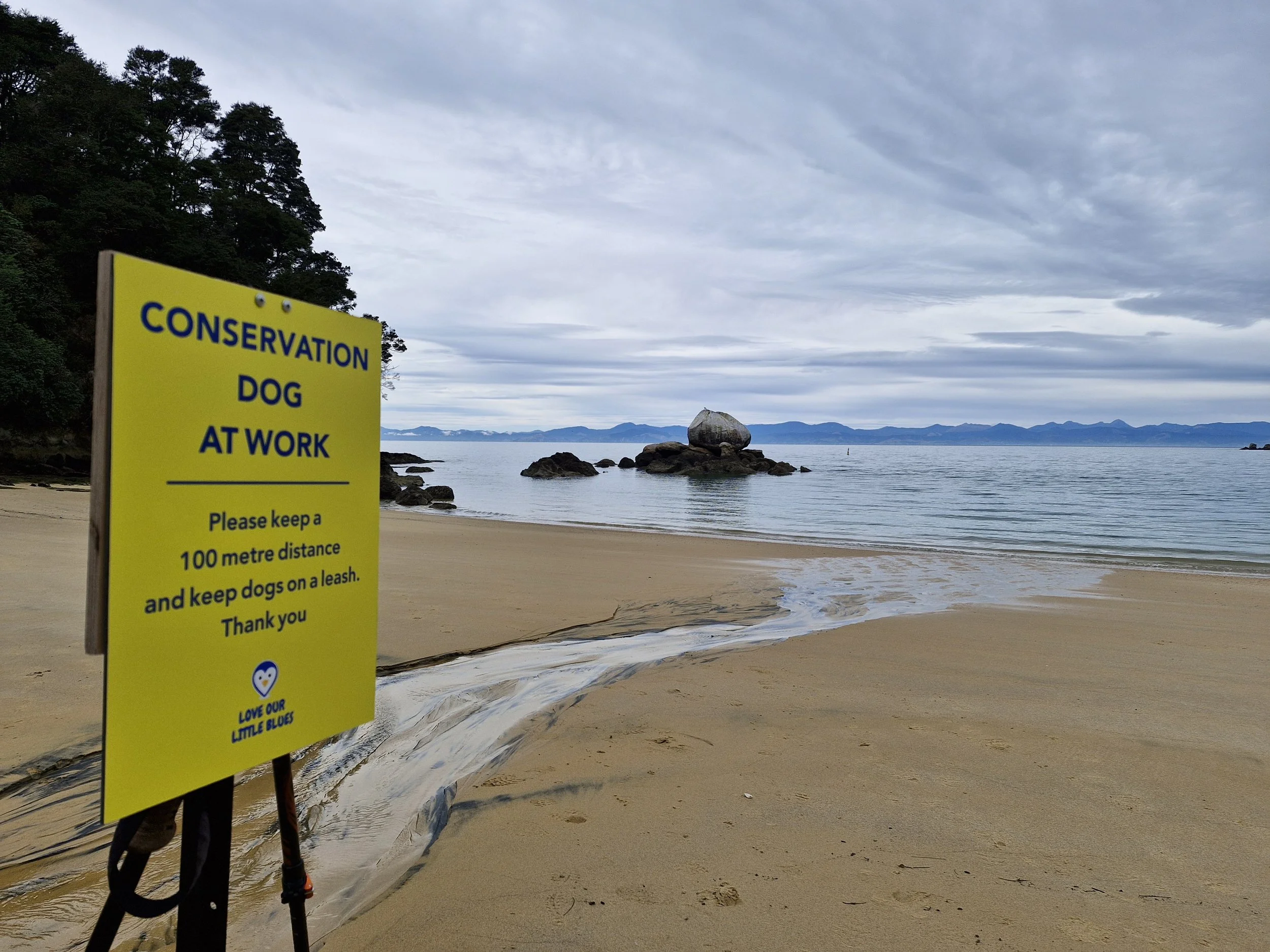
DOC-approved conservation team.
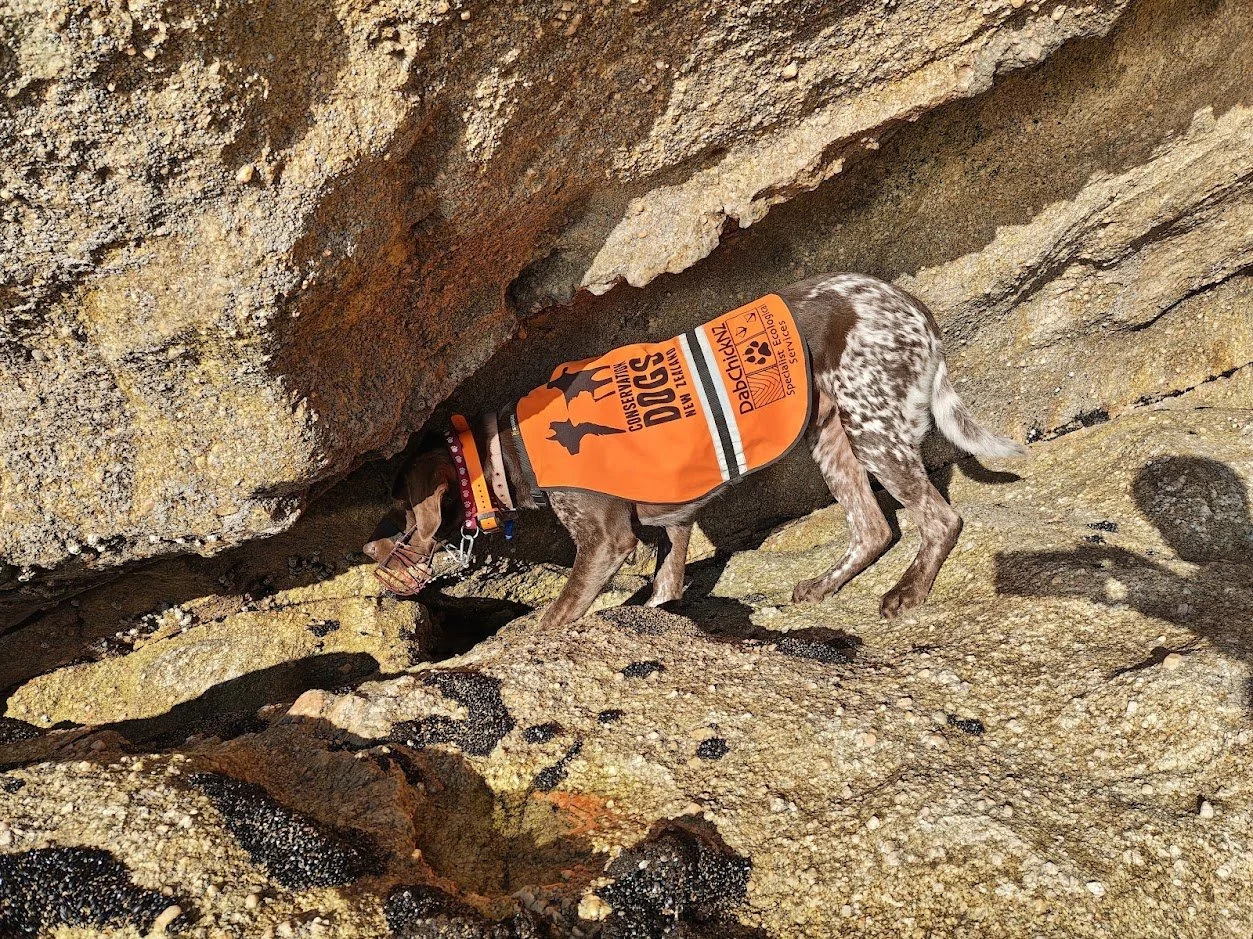
With a sense of smell tens of thousands of times more powerful than a human's, Miro, a five-year-old German Shorthaired Pointer specially trained to locate native bird burrows, is uniquely equipped for the challenge.
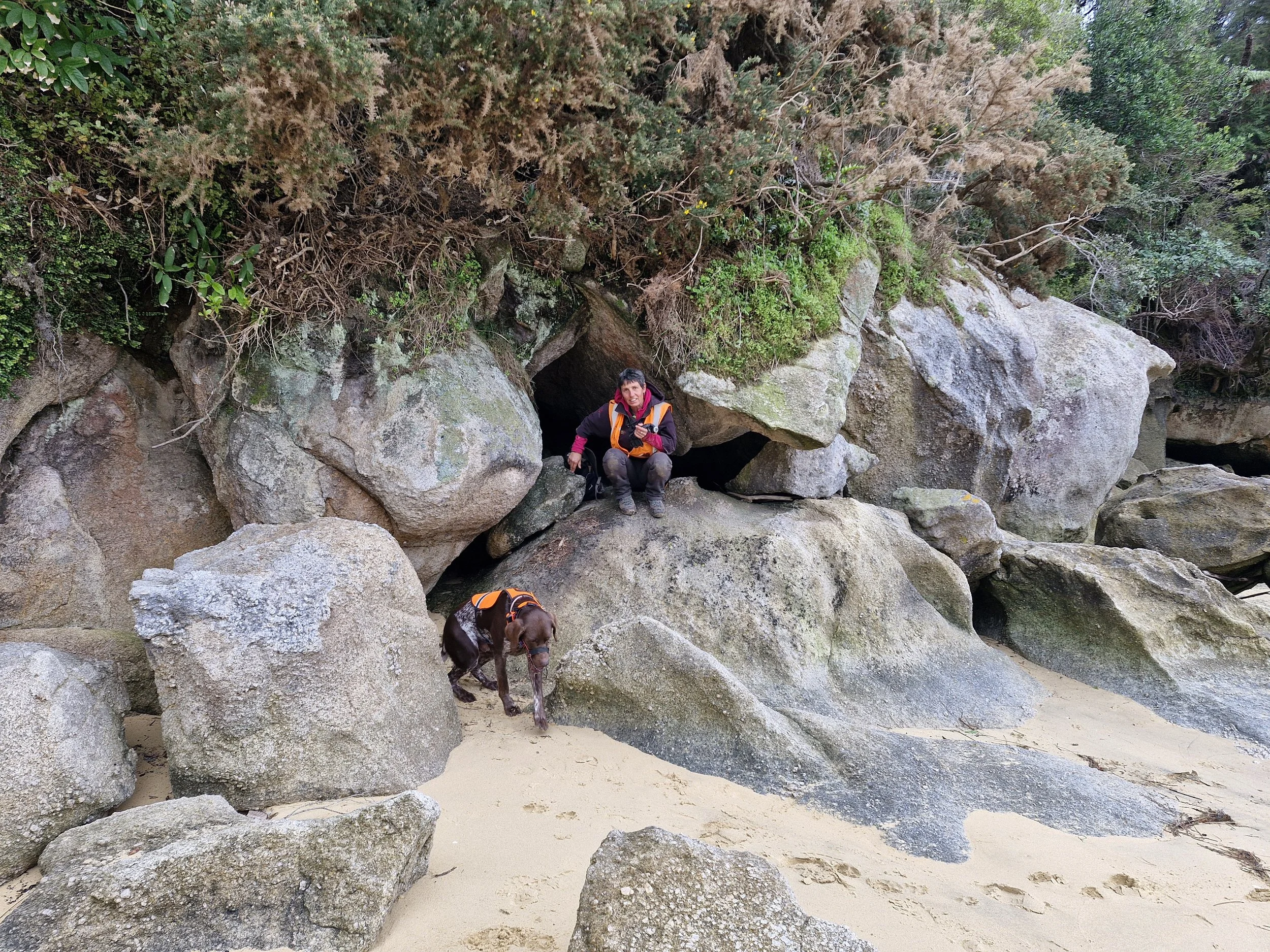
Over five days, from 3 to 7 August 2026, Miro and Jo covered an impressive 39 kilometres of coastline between Tapu Bay and Split Apple Bay. Their survey took them across steep slopes, tussock-covered dunes, slippery rocks, dense gorse, tangled branches, and boulder-strewn headlands.
One thing became very clear during the survey: little blue penguins have a remarkable talent for choosing some of the most inaccessible places imaginable to build their nests. And for good reason. To stay clear of predators.
Survey Area and Findings
The survey covered a wide range of coastal bays and public walkways between Tapu and Split Apple.
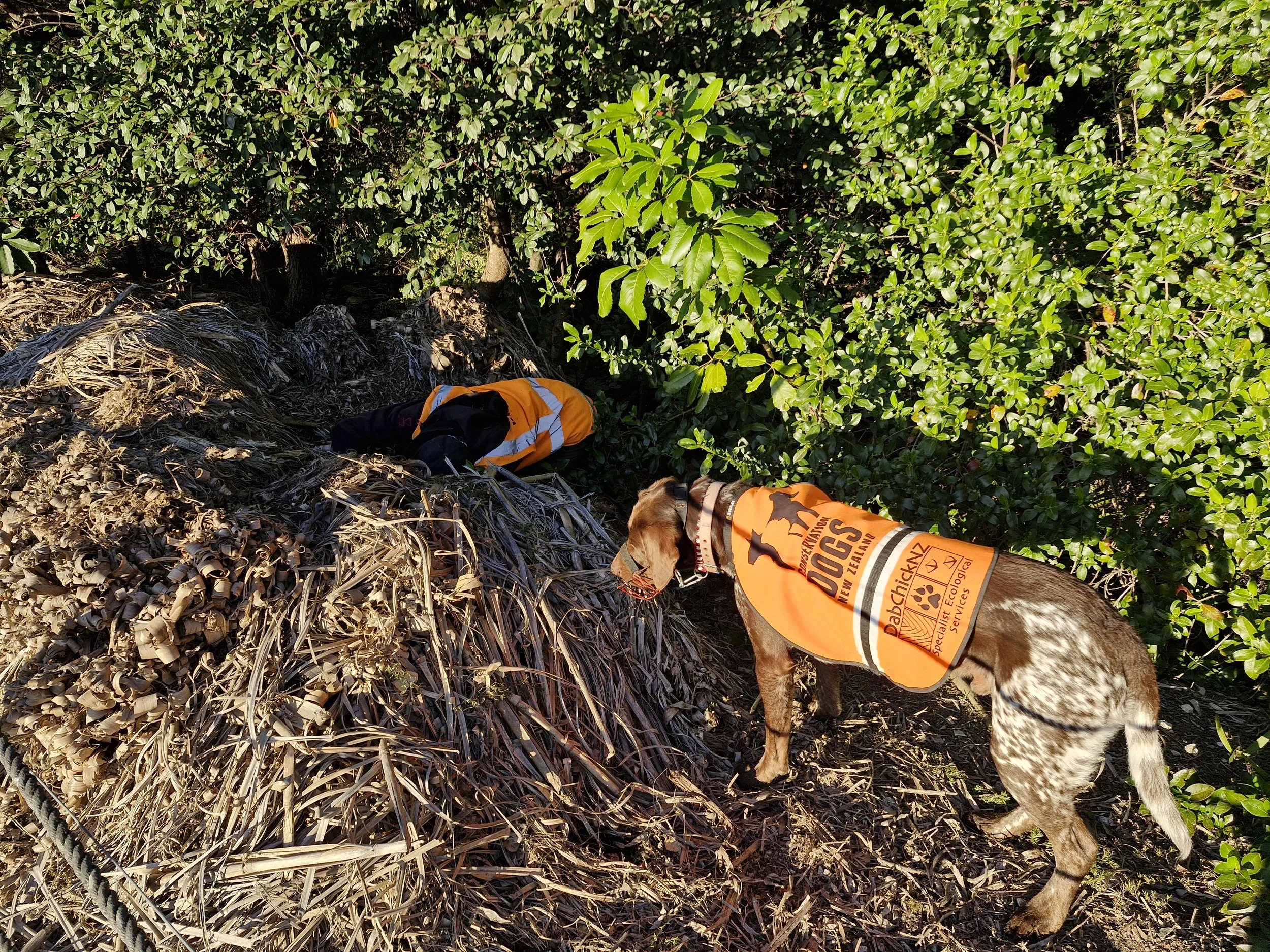
There’s a penguin in there somewhere.
Combining newly identified burrows with known nesting locations, including natural burrows, nest boxes, houses, decks and sheds, the survey recorded 152 active little penguin nesting sites.
For comparison, a similar survey conducted in October 2020 by conservation dog Mena and handler Alastair Judkins identified 173 active burrows.
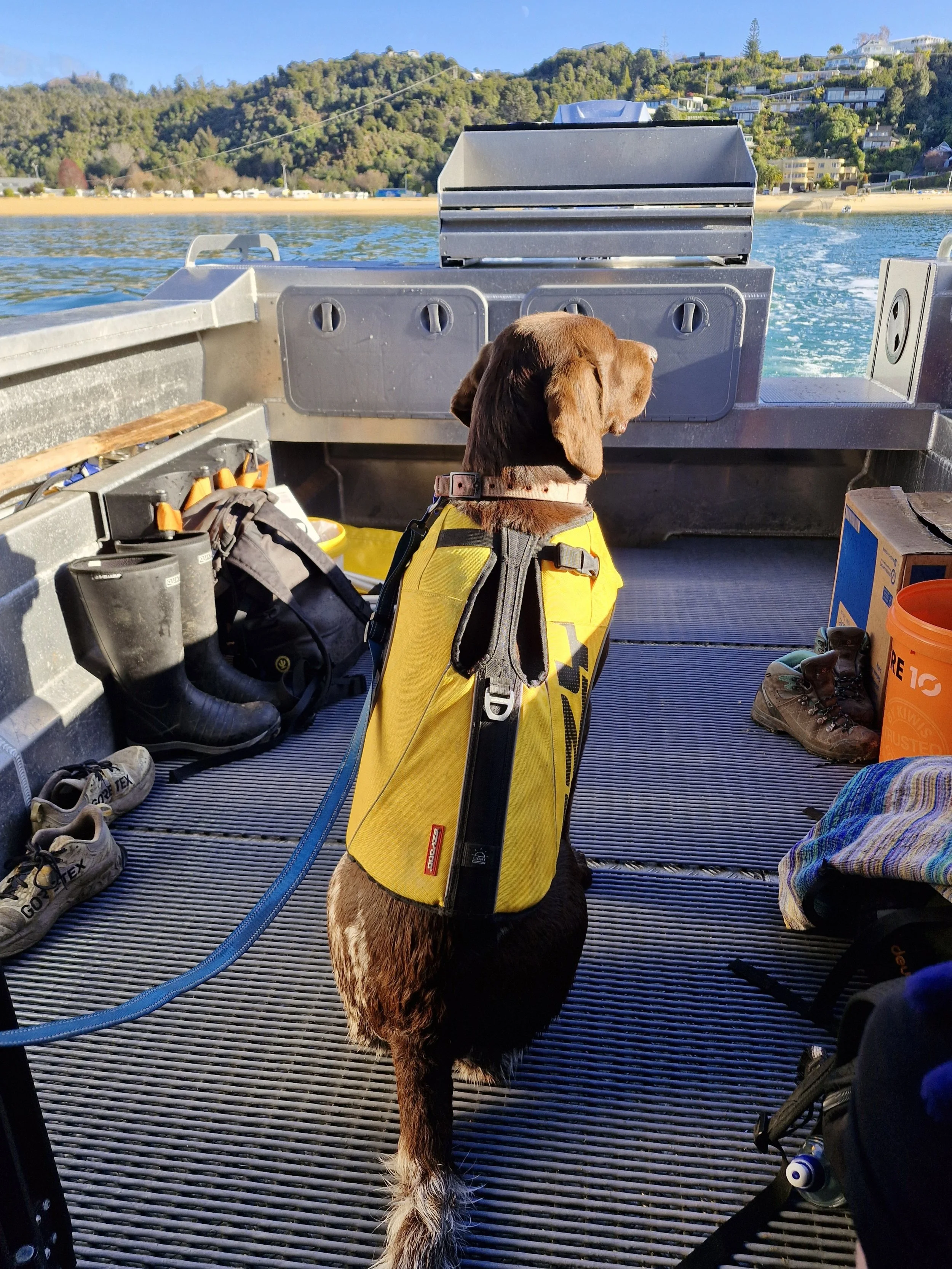
Hitching a welcome ride with the DOC Marine Ranger
While an increase in numbers would have been encouraging, the findings provide valuable insight into the challenges facing little blue penguins and help guide future conservation efforts.
Understanding the Challenges
Over the past six years, little blue penguins have experienced significant pressures that have likely contributed to population decline, including:
Two major starvation events in 2024 and 2025 caused by reduced food availability due to climate change and warming sea surface temperatures
Significant habitat loss resulting from coastal residential development.
Fatal dog attacks.
Fatal vehicle and boat strikes.
Increased disturbance from human activities and predators leading to nest abandonment. As the beautiful beaches attract more humans, the negative impact increases.
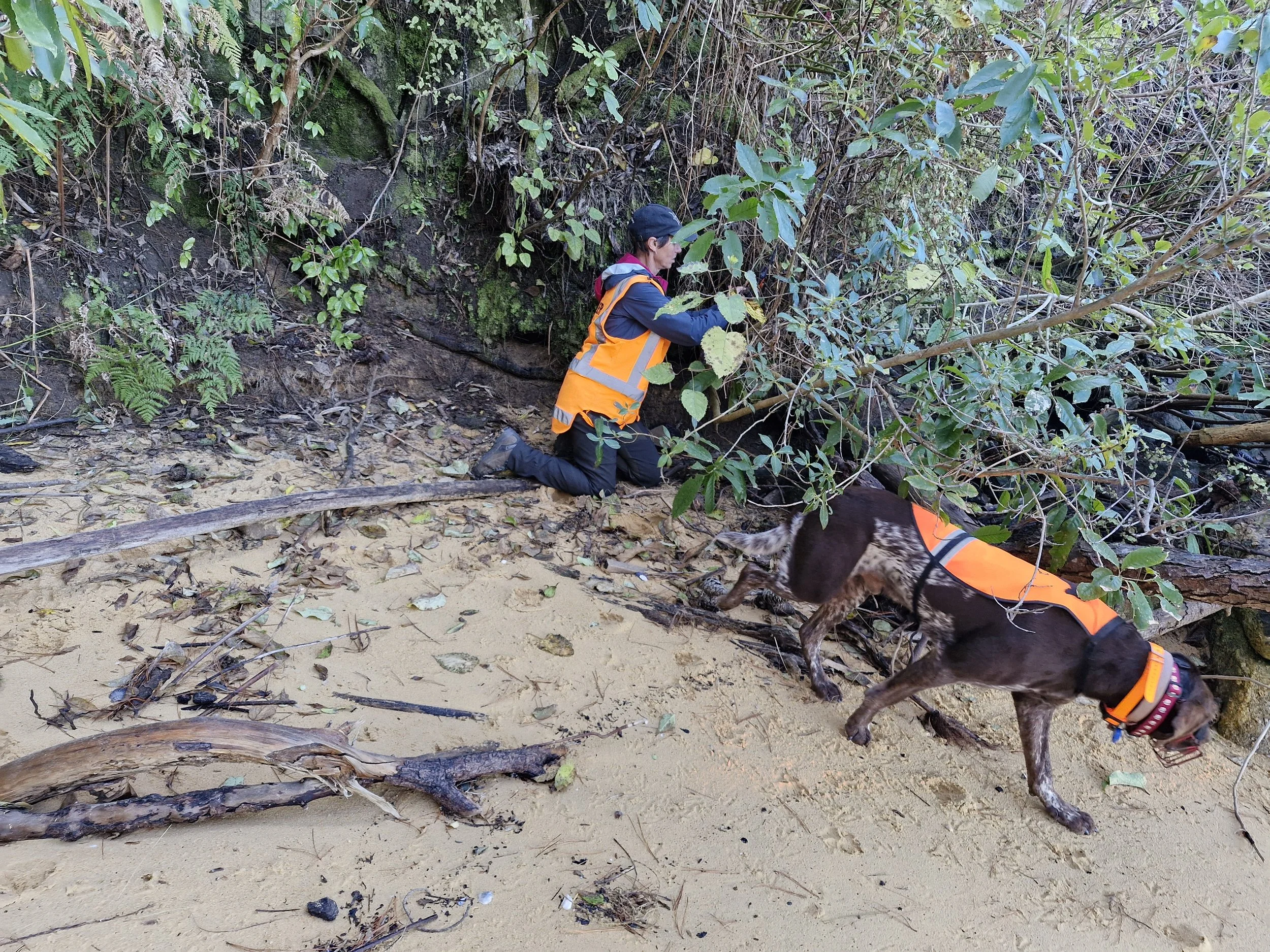
On to the next one.
During the survey, one nesting area alone contained several abandoned burrows, highlighting the ongoing impact of these pressures on breeding populations.
Little blue penguins are currently classified by the Department of Conservation (DOC) as "At Risk - Declining."
Why This Survey Matters
Years in the making, this survey represents an important milestone for local conservation efforts. Regular surveys are ideally conducted every four to five years to monitor population trends, identify emerging threats, and locate previously unknown breeding sites.
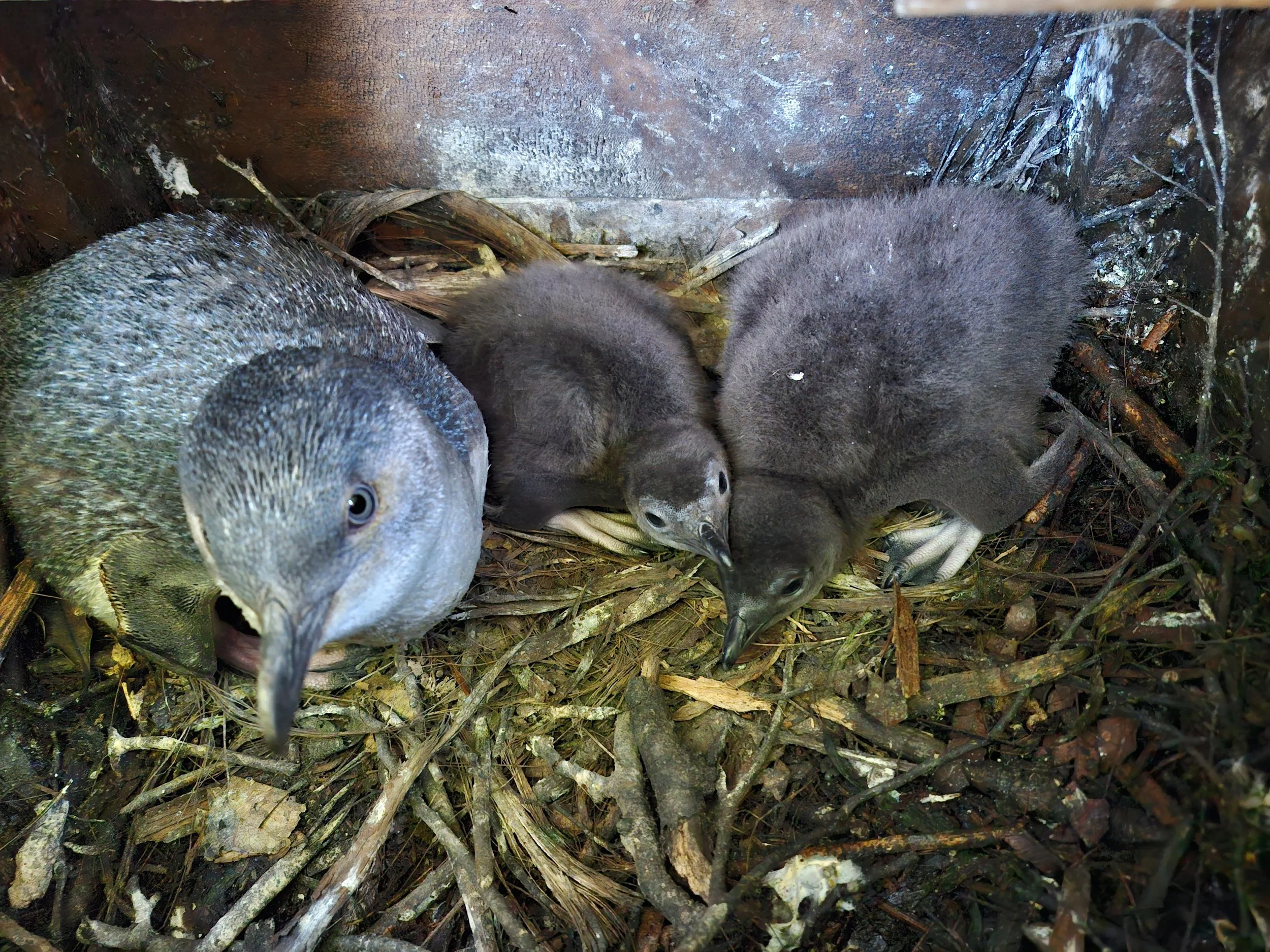
Protecting their chicks.
The data collected by Jo and Miro provides a valuable snapshot of how local penguins are faring today and will help inform future conservation initiatives, including:
Habitat protection and restoration projects
Community education and engagement programmes
Predator control efforts
Advocacy for stronger protections for penguin habitat preservation and replacement
Every burrow identified strengthens our understanding of these remarkable seabirds and helps ensure conservation resources are directed where they are needed most.
A True Team Effort
This survey was funded by the Tasman Bay Blue Penguin Trust (Love Our Little Blues) and supported by a dedicated network of individuals and organisations committed to protecting little blue penguins.
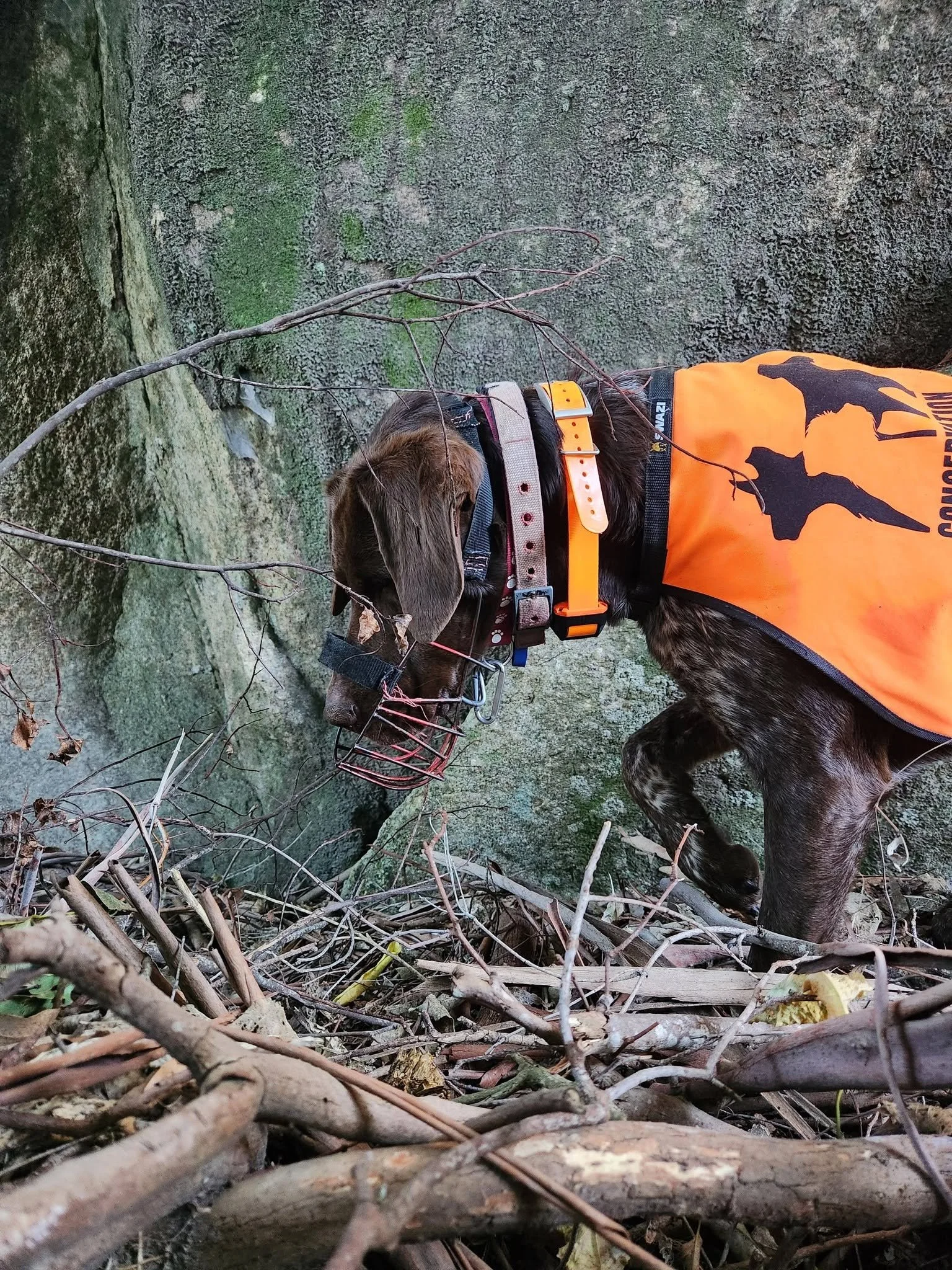
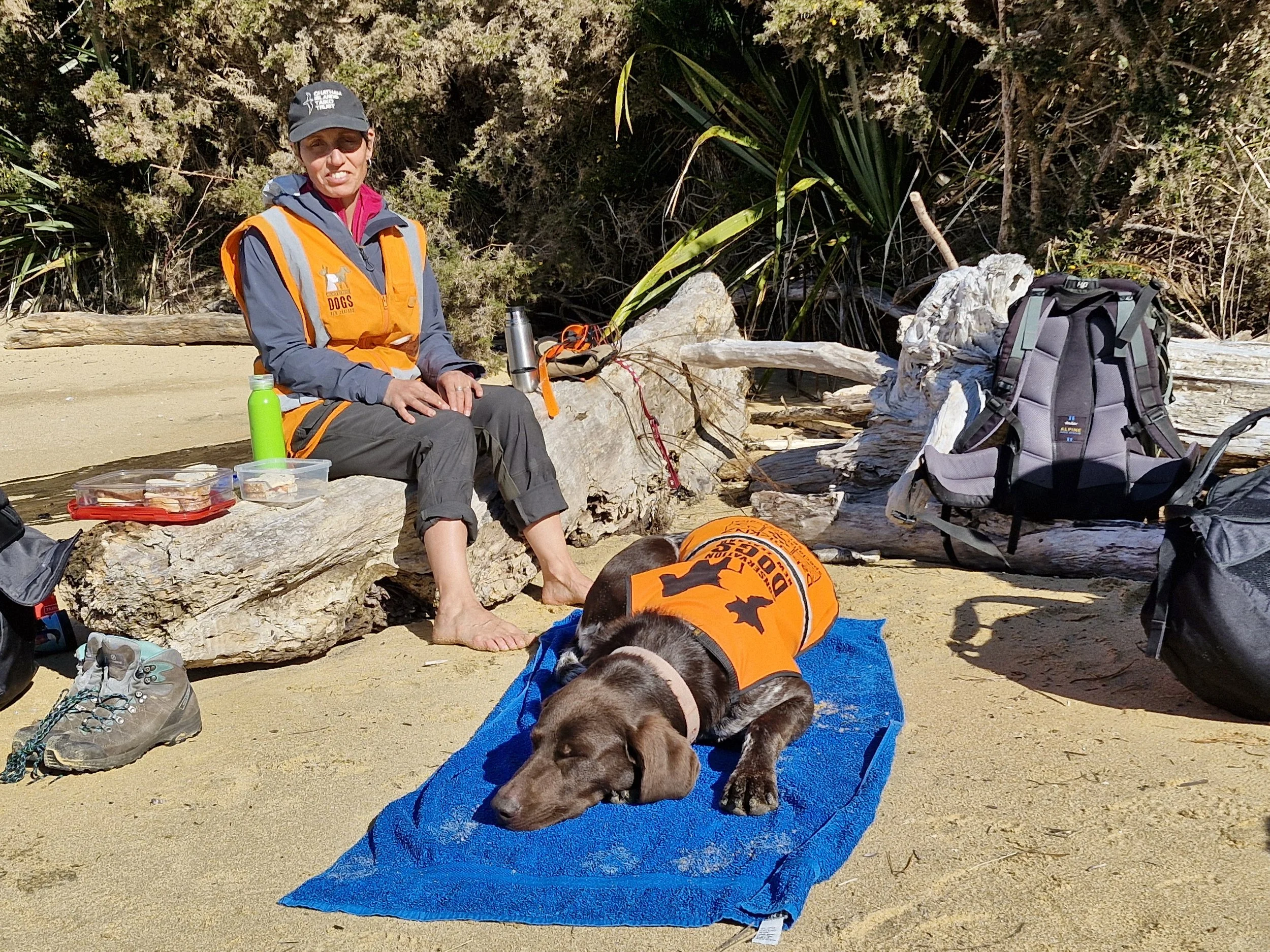
Miro - the pointer!
Special thanks go to:
Jo Sim of DabChickNZ Specialist Ecological Services for leading the survey.
Miro, whose exceptional detection skills made the work possible.
The Department of Conservation (DOC) for providing boat support on day 4 of the survey.
The Love Our Little Blues volunteer team for their daily assistance and support.
Looking Ahead
Although the survey results highlight ongoing challenges, they also provide essential information that will help shape future conservation action. By better understanding where penguins are nesting and the pressures they face, the community can work together to protect and restore habitats, reduce threats, and support the long-term recovery of our local little blue penguin population.
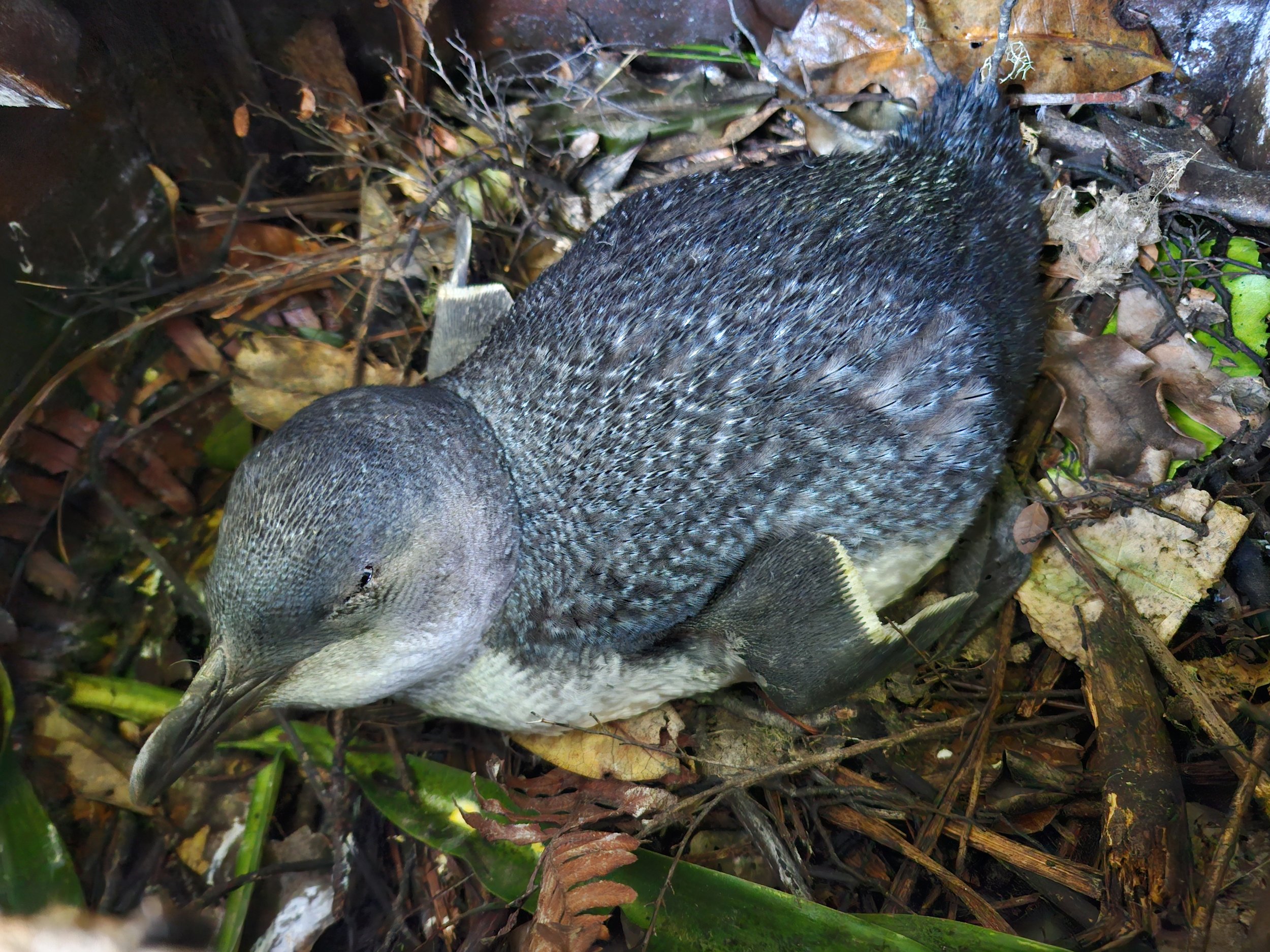
On egg incubation duty.
The Big Little Penguin Count is a reminder that conservation is a shared responsibility, and that every survey, every volunteer, and every protected burrow contributes to a brighter future for these stoic coastal residents.
If you would like to make a contribution to support Love Our Little Blues, head to our Givealittle page. Donations help to fund equipment such as trail cameras and their consumables (data cards, rechargeable batteries etc), burrow scopes, predator trapping supplies, supplementary food for starving penguins, eDNA sampling kits for penguin diet analysis research, microchips…. the list goes on.
https://givealittle.co.nz/donate/org/tasman-bay-blue-penguin-trust
Thank you in advance for your support.