Warming Seas Wipe Out Penguin Chicks
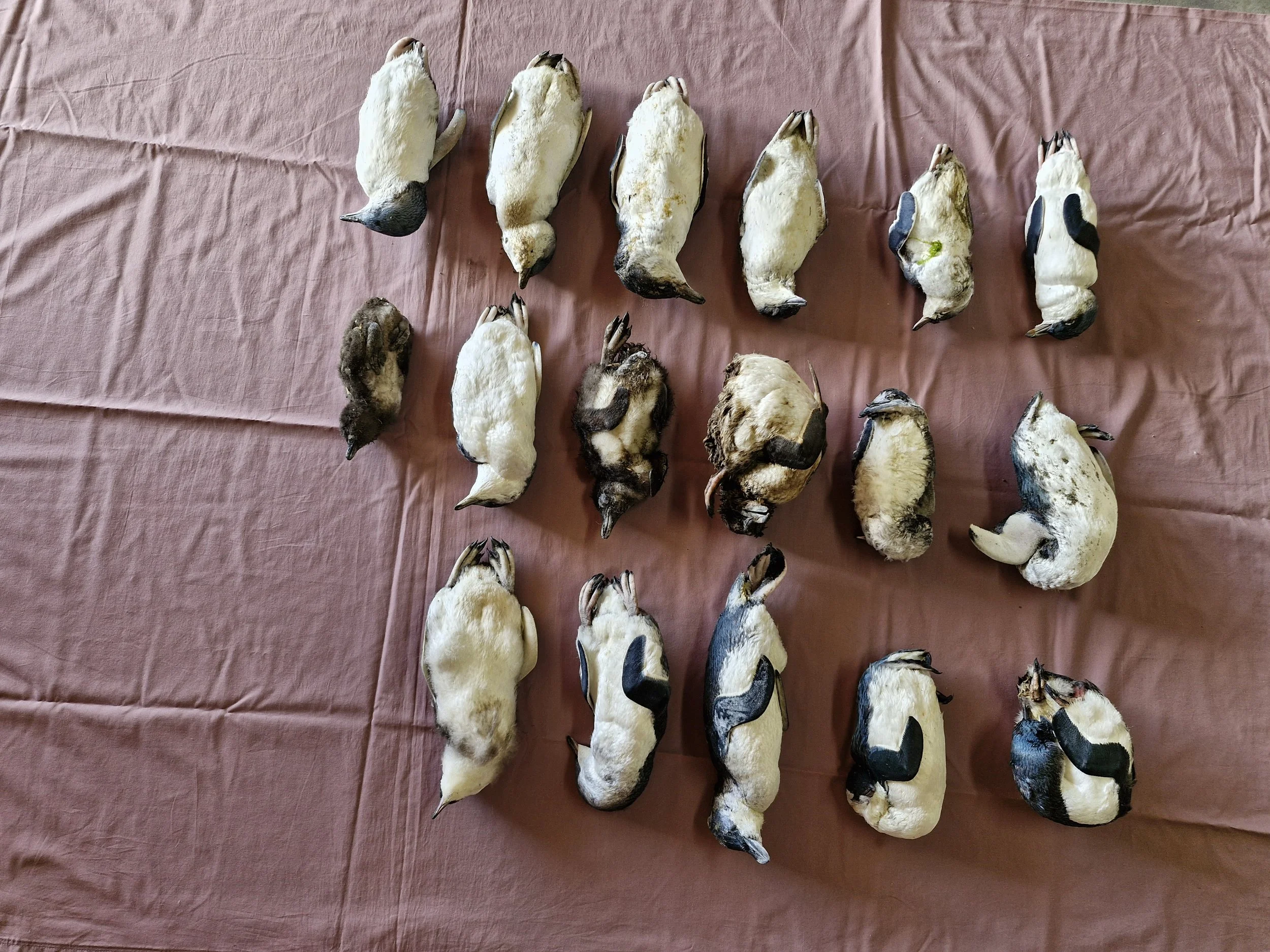
The 2025/26 breeding season has been disastrous for our little penguins in Tasman following on from the 2024/25 starvation event
Again, warming sea surface temperatures(SST) drove their prey species, pilchards and anchovies, deeper & further out into cooler water, out of foraging range for adults. With hungry chicks to feed, penguin parents were forced to stay out at sea feeding for multiple days to take back sufficient food and were unable to return for nightly feeds.
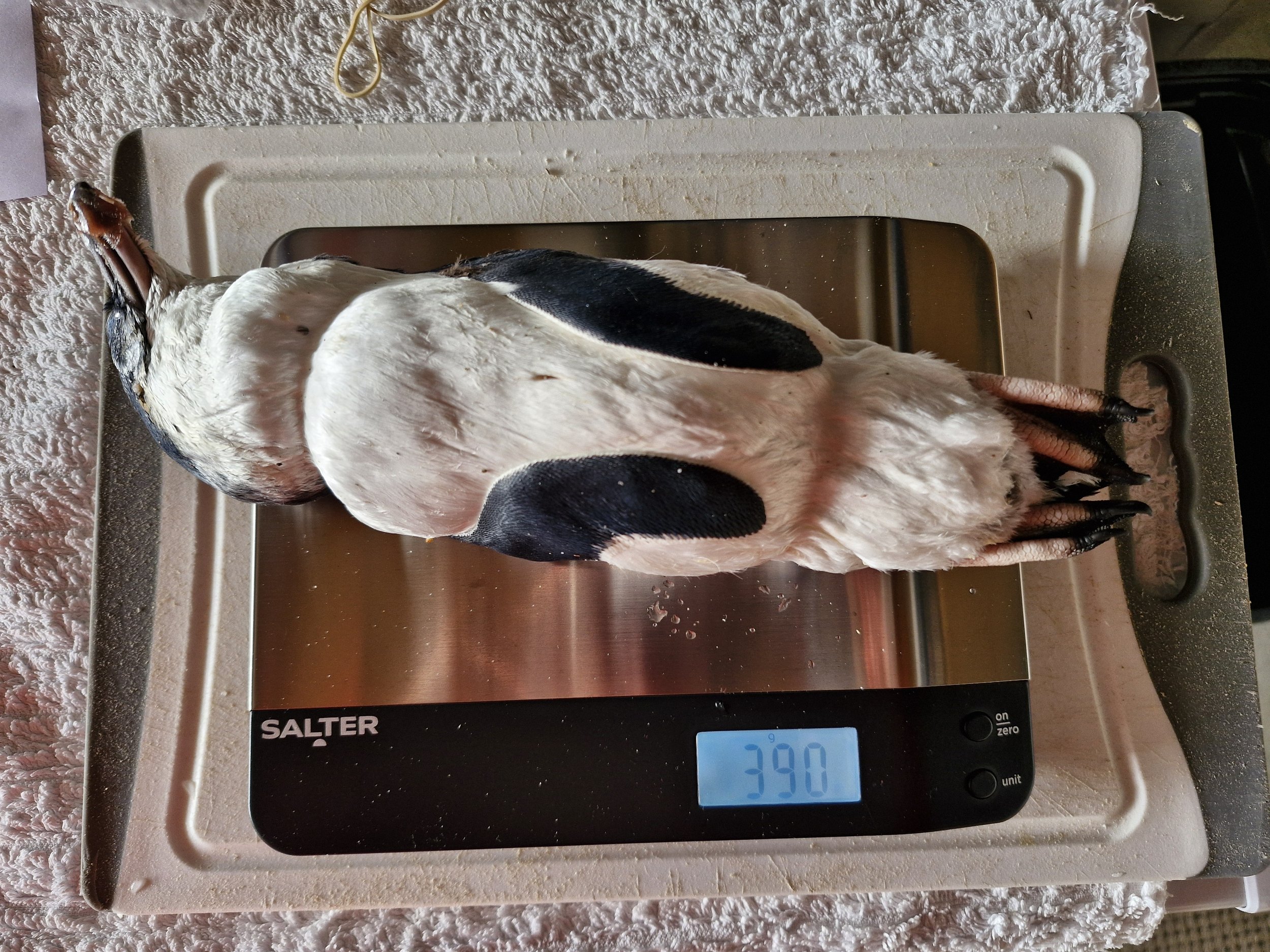
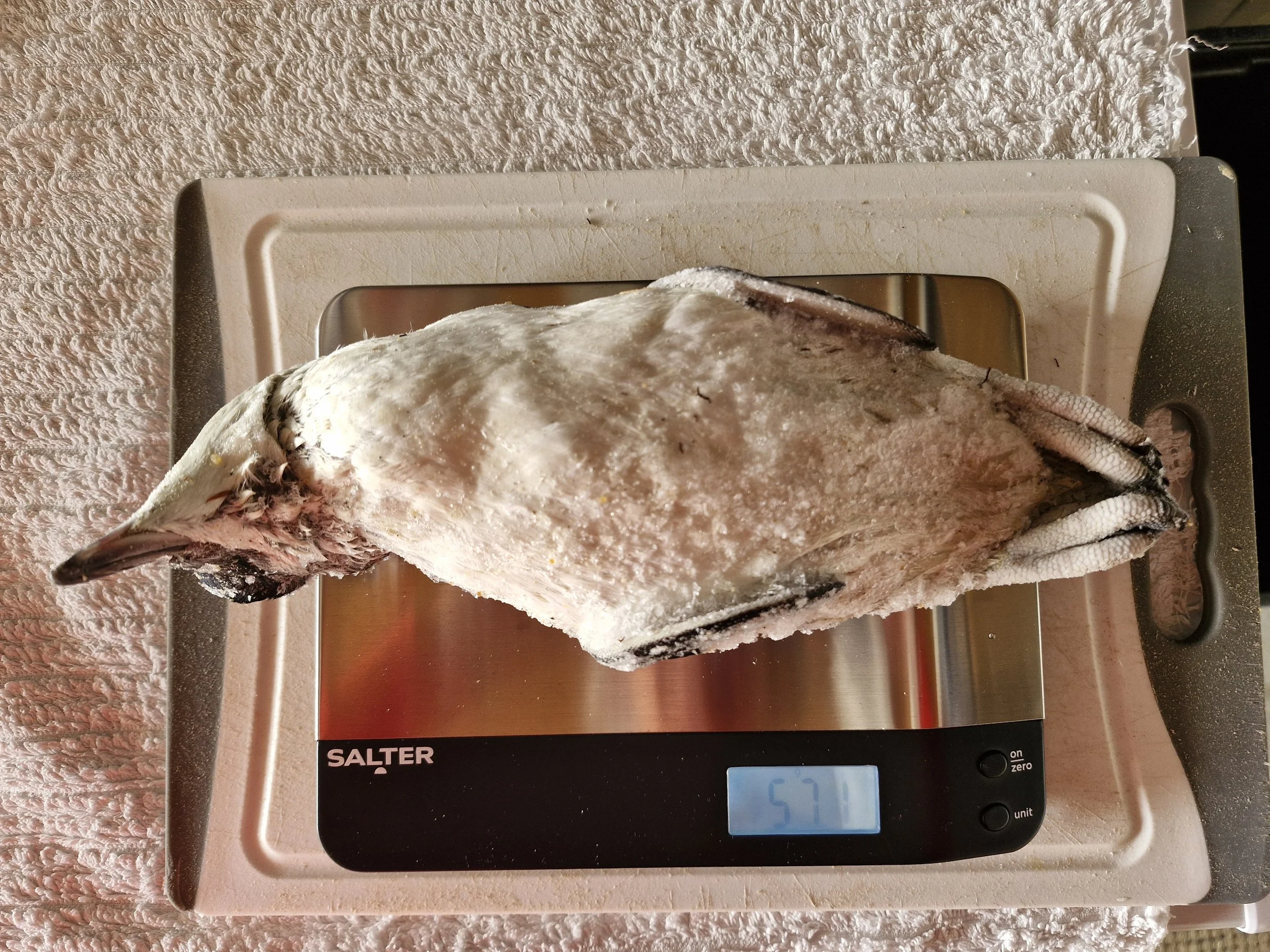
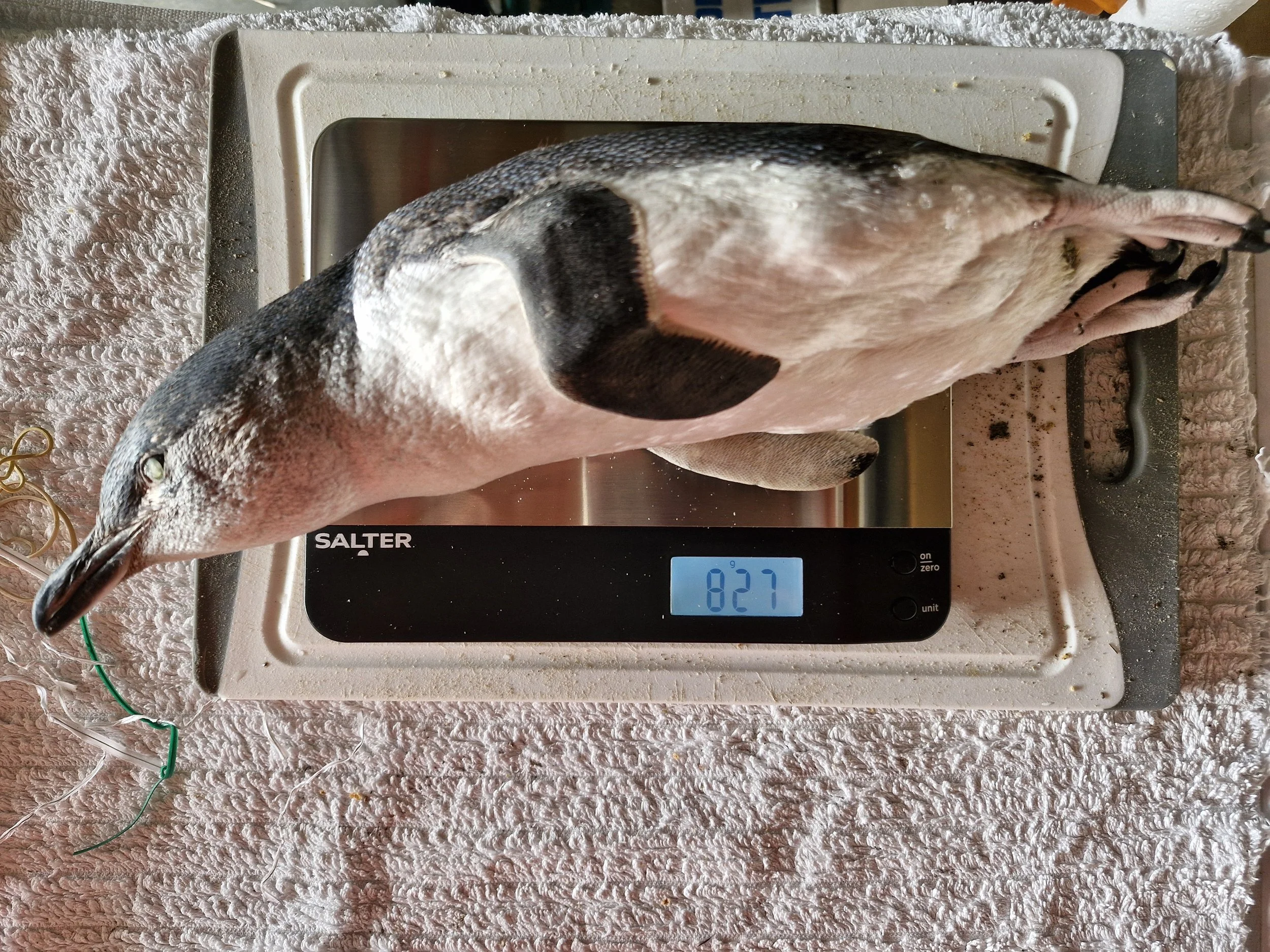
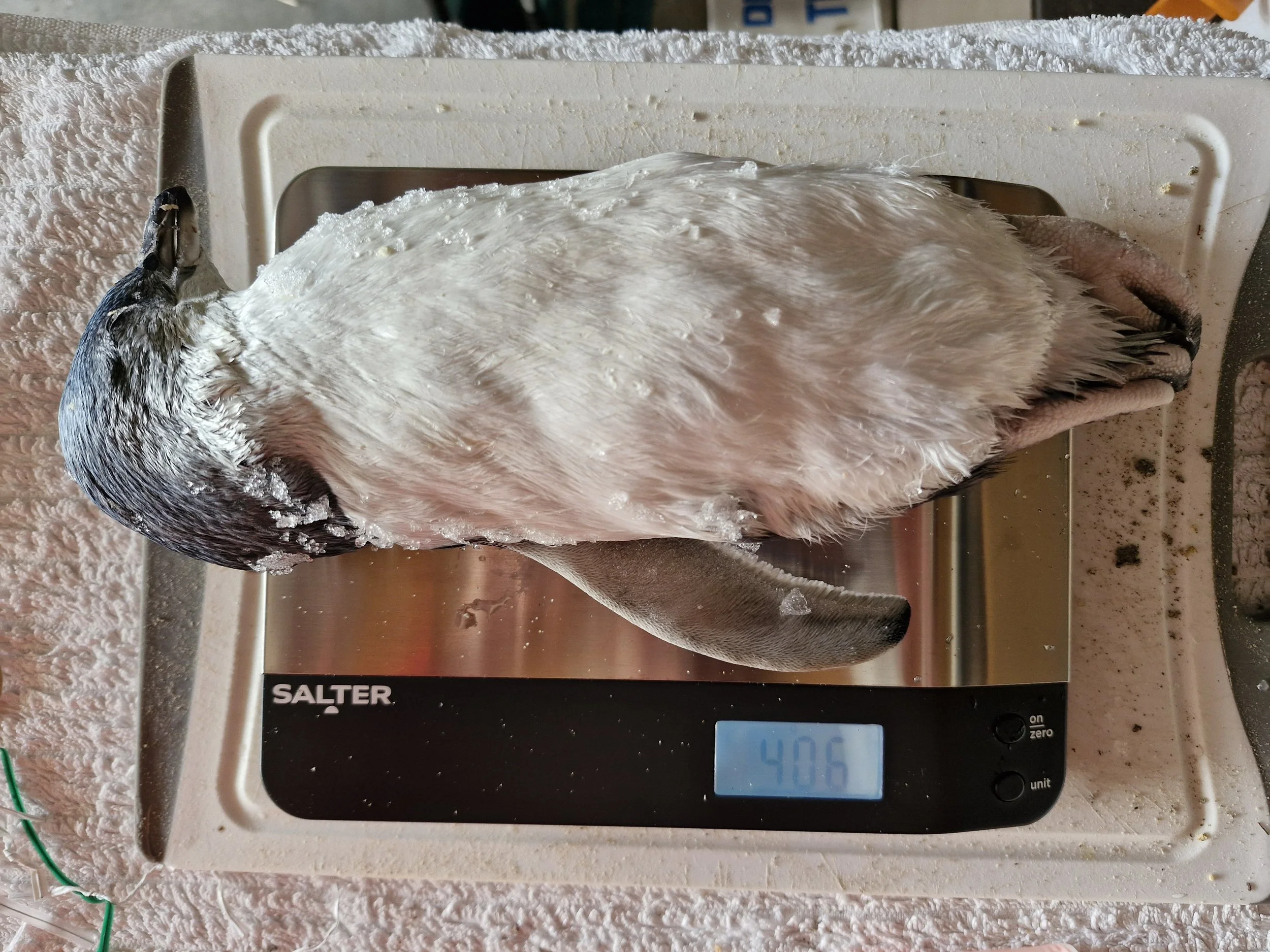
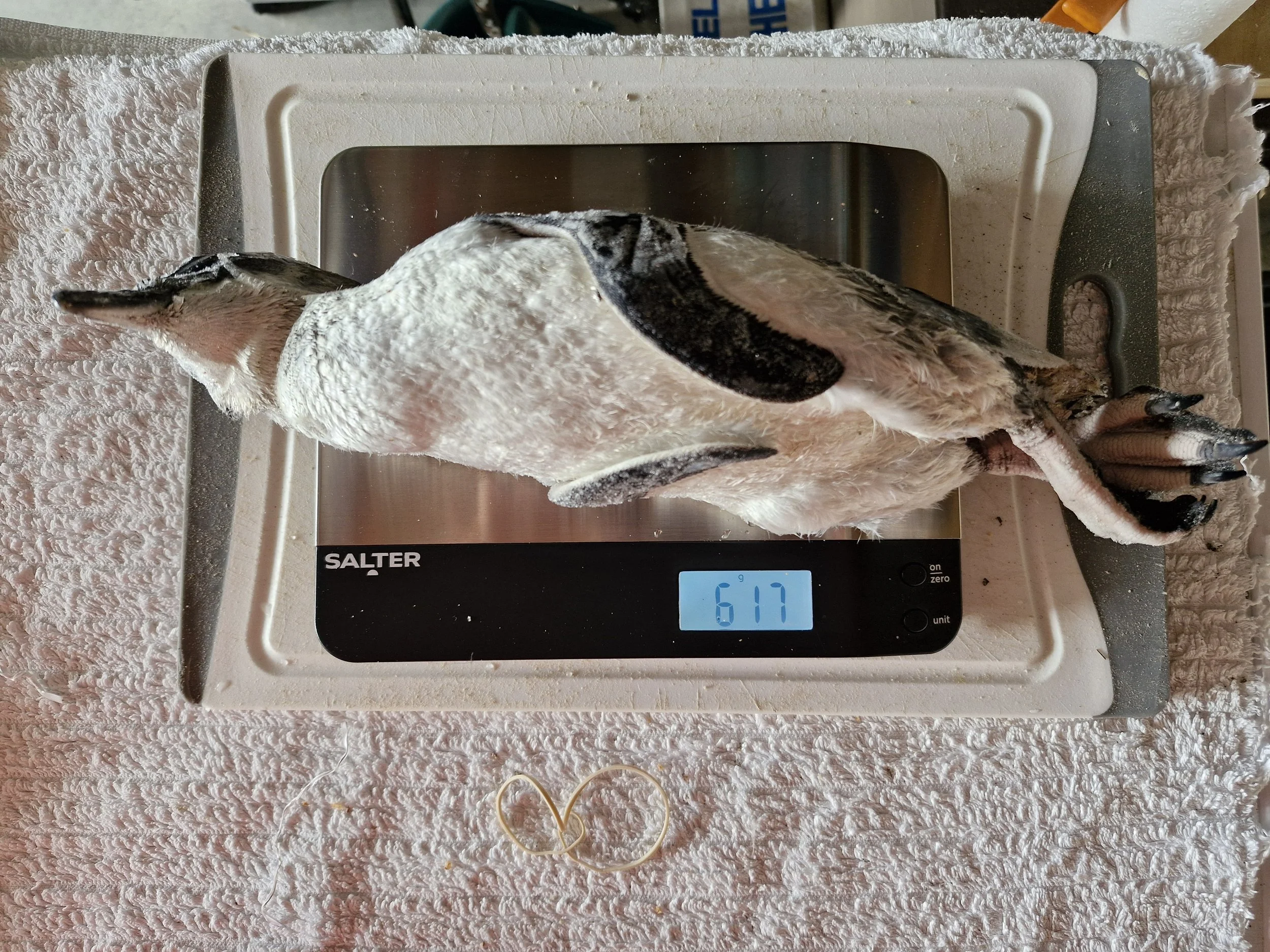
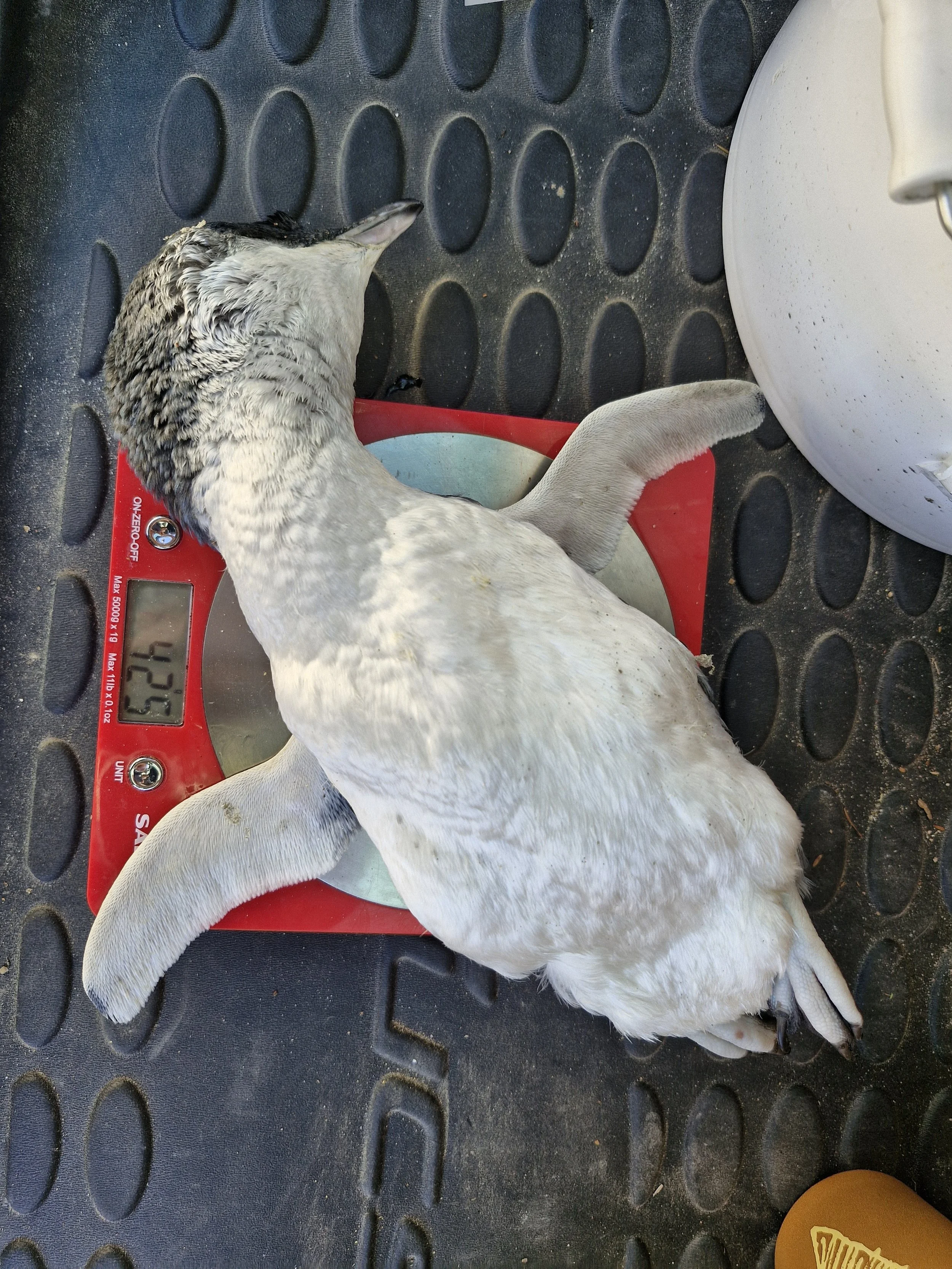
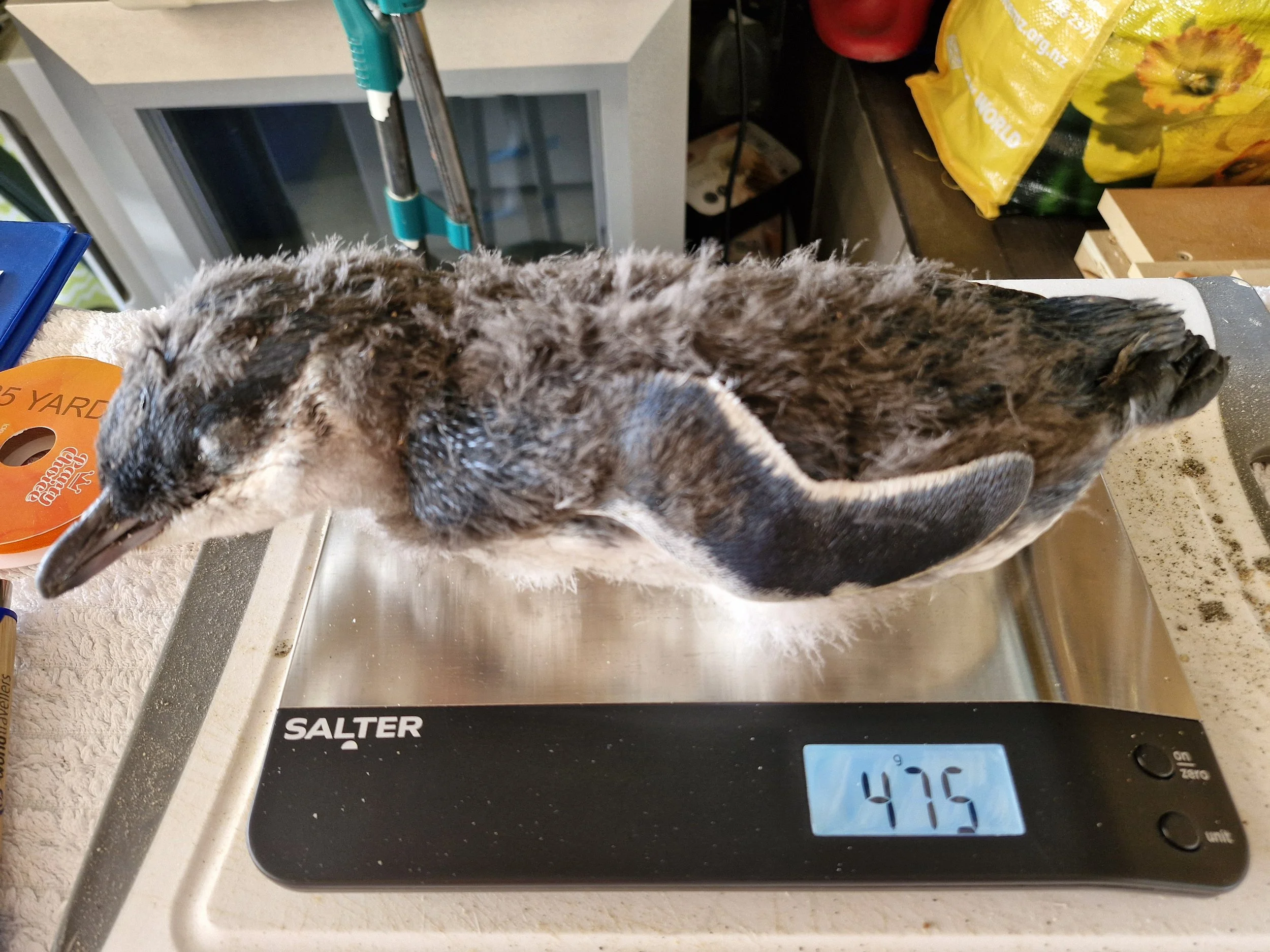
Going without food is a deadly business for chicks. Unable to forage for themselves and totally reliant on their parents to return every night, chicks struggled to develop. In desperation they left their safe burrow in search of food, a mission bound to fail. Underweight and under-sized, still with fluffy down so not waterproof, the almost-fledglings’ survival chances were near impossible.
It started early November when little penguins were observed washed up on our beaches dead and dying, cold, wet, exhausted and starving. Dozens of them.
From then on, every few days, calls came in of penguin chick and fledgling sightings across Tasman Bay, from the Abel Tasman National Park through to Boulder Bank at Nelson. Last year’s tragedy was unfolding again.
As well as starving fledglings washing up on the beaches, the monitoring team also observed burrows and nest boxes with chicks being abandoned by adults unable to support their demanding offspring.
The rehab team worked tirelessly to save as many as possible of those found still alive. It was a heartbreaking task with many dying during transfer or on arrival at the rehab clinic, simply too far gone with starvation to survive. But a few won their battle. They gradually increased in weight over many weeks, grew their waterproof feathers and developed their swim skills, thanks to the patience and support of the rehab team.
Grateful thanks go to:
The amazing vet and rehab team for their expertise, care and dedication… 24/7 for 3 months
The volunteers who kept the clinic and pool clean (little blues are VERY messy critters!!)
DOC for taking the calls and setting rescues in motion
Anatoki Salmon for providing salmon pieces (a little blue’s fave!)
Sealord who provided fish for diet variation
Bunnings Nelson for clinic hardware supplies
All the beach goers and boaties who cared and made the call for help – your actions saved a lucky few but also meant those that didn’t survive weren’t left to suffer a slow death by starvation, predation and scavenging.
Volunteer tasks include 24 hour feeding, endless cleaning (pens, aviary, pool, clinic, nest boxes, incubators), cutting up fish into teeny beak size, prepping individual meals, administering medications, washing mountains of dishes, laundering poopy towels, supervising swim times…over and over and over.
Little penguins/korora are regarded as “sentinels of the sea”. What happens to little penguins reflects the health of the ocean. If the ocean is in good health, the penguin flourish. If not, they struggle and die.
So what is this starvation event telling us? All is not good at sea. There has been a marine heatwave in Tasman Bay since November which will continue to April, according to NIWA. The warming of the ocean surface forces the penguins’ prey species to deeper, colder water out of range for foraging adults in poor body condition, impossible for starving, underweight fledglings still learning the ropes of how to survive at sea.
Will this tragedy happen again? Most likely. With climate change inducing marine heat waves the little blues will struggle in a marine environment that is simply not supporting them.
Furthermore, on land they will fall prey to uncontrolled dogs, cats, mustelids, rats and car strike, all 100% preventable unless we humans take better care of the coastal habitat we share with our native species.
The fate of little penguins/korora, the sentinels of the sea, tells us a lot about our environment and ourselves.
But are we listening? Are we responding?
The conservation status of little penguins/korora is “at risk/declining”. Every single one saved counts. So if you see a little penguin in trouble, please make the call.
DOC hotline 0800 362 468 or the
Tasman Bay Blue Penguin Trust 021 797 267 or Messenger.